Predictive Financial Modeling: A Practical Approach
Predictive Financial Modeling: A Practical Approach
Financial models are only as good as their data and assumptions. Predictive tools can help explore scenarios faster, but they should not be treated as guarantees.
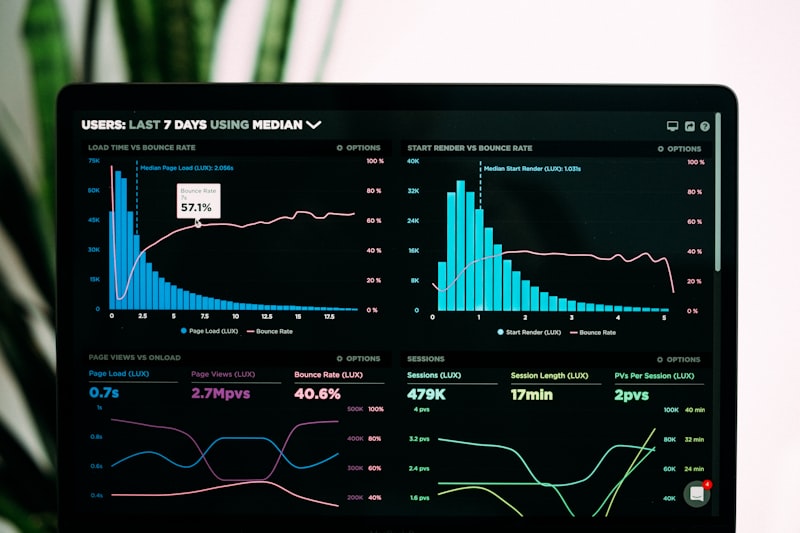 Scenario ranges are more useful than single‑point forecasts.
What Predictive Modeling Is Good For
- Exploring what‑if scenarios
- Stress‑testing cash flow
- Comparing trade‑offs across plans
What It Cannot Do
- Eliminate uncertainty
- Replace human judgment
- Predict market shocks with certainty
A Practical Setup
- Connect reliable data sources (sales, costs, inventory).
- Document assumptions and update them regularly.
- Use ranges instead of single‑point forecasts.
Closing Perspective
Predictive models are decision tools, not crystal balls. Use them to improve clarity, not to manufacture certainty.
Example Scenario
A CFO wants to test the impact of increasing marketing spend by 15% while lead times rise. A predictive model can simulate the cash‑flow impact in minutes, but only if assumptions are explicit. The goal is faster decision cycles, not false certainty.
Practical Guardrails
Treat every model output as a range. Review assumptions monthly. If the inputs drift, the model drifts too. This keeps decision quality high even when markets change.
Deeper Mechanics
Financial automation succeeds when data is reconciled frequently and assumptions are visible. Models should show ranges, not single‑point forecasts, and should expose the variables that drive outcomes. This keeps decision‑makers grounded.
Reliability Checklist
- Documented assumptions
- Monthly drift review
- Human approval for high‑impact changes
Common Failure Mode
Teams treat model outputs as certainty. The healthier approach is to treat them as guidance. When the market changes, the model must be updated or it becomes misleading.
Checklist for Decision Quality
- Document assumptions explicitly.
- Update inputs on a fixed cadence.
- Use ranges, not point estimates.
Metrics to Watch
Track forecast accuracy, variance by scenario, and how often decisions change after new data arrives.
Implementation Example
Pilot predictive modeling on a single revenue stream. Document assumptions and compare monthly forecasts to actuals. As confidence grows, expand the model to additional cost centers and scenarios.
Validation and Trust
Finance teams need confidence in assumptions. Models should show inputs and allow quick sensitivity checks. This makes automation a decision aid rather than a black box.
Additional Notes
Finance teams need transparency. When a model changes its output, the team should see why. Models that hide assumptions are hard to trust and even harder to improve.
Additional Notes
Finance teams need transparency. When a model changes its output, the team should see why. Models that hide assumptions are hard to trust and even harder to improve.
Additional Notes
Finance teams need transparency. When a model changes its output, the team should see why. Models that hide assumptions are hard to trust and even harder to improve.
Additional Notes
Finance teams need transparency. When a model changes its output, the team should see why. Models that hide assumptions are hard to trust and even harder to improve.
Additional Notes
Finance teams need transparency. When a model changes its output, the team should see why. Models that hide assumptions are hard to trust and even harder to improve.